Session 10: mincha on Shabbat
Burst of Tefilla Inspiration
The Shabbat Test
Mr. Prinz was a well known carpet dealer in The Hague, the capital of Holland. He had built his business over many years and was known for carrying carpets that were difficult to find anywhere else. When he turned eighty, he handed over daily management to his adult sons, but he still followed everything closely.
One winter Friday night, the entire family was gathered in his home for Shabbat. The table was set, the food had already been served, and Shabbat songs filled the house. It was a normal, peaceful Shabbat night.
In the middle of the meal, a maid entered and said that a representative from the royal palace was asking to see Mr. Prinz.
The man introduced himself, apologized for the interruption, and said he was sent by Prince Willem Frederik Hendrik (third son of King William II of Holland). The prince needed five specific carpets in exact sizes and designs. They were needed immediately to decorate a hall in the palace for an exhibition scheduled for that night. According to the official, no other store had what was required.
Mr. Prinz listened and answered right away.
“I’m very sorry,” he said. “Tonight is Shabbat. I can’t do business now. If the prince can wait until tomorrow night, after Shabbat is over, I’ll be glad to help.”
The official said this was not possible. Guests were already on their way and preparations were underway.
Mr. Prinz stood up. “Please tell His Highness that we do not conduct business on Shabbat.”
The official left, and the family returned to their meal and singing.
A short time later, the official came back. He said the prince was asking again and stressed that not receiving the carpets would seriously disrupt palace plans.
After a brief silence, Mr. Prinz replied calmly, “I can only repeat what I already said. It is Shabbat, and I cannot help.”
After the meal, right after Grace After Meals, the official returned a third time. This time he brought a handwritten letter from the prince. It read:

Dear Mr. Prinz,
I must receive the carpets immediately. I am prepared to pay double or even triple their value. If you refuse me this time, I will remove you from my list of suppliers.
Prince Hendrik
Mr. Prinz read the letter carefully.
“I cannot respond in writing on Shabbat,” he said. “But you can deliver my message verbally.”
Honored Prince,
You are indeed a great and respected ruler, and it is my duty to listen to your voice and to strive to fulfill your wishes at all times.
But above you stands One who is higher than all: the King of Kings, the Creator of all, who commanded us to rest on Shabbat.
I deeply regret losing such an important and esteemed customer as Your Highness, but I have no ability to act otherwise.
I will not desecrate the Shabbat.

The official left.
Once the door closed, the tension in the home was palpable. Everyone understood what was at stake. Losing the palace as a client could seriously damage the business.
One son said they should send the carpets without charging. Another suggested sending some of them as a gift. Everyone was worried.
Then their grandmother spoke up.
“Stop,” she said. “Why are you upsetting your father? This is a test. We are being tested on our commitment and dedication to Shabbat. Don’t focus on the money we might lose. God can always replace whatever is taken from us.”
After Shabbat ended on Saturday night, a formal invitation arrived. Mr. Prinz was asked to come to the palace on Monday morning at ten o’clock.
No one knew what that meant. The entire family was anxious.
On Monday morning, Mr. Prinz went to the palace. He was nervous but remained composed. Instead of anger, he was greeted warmly by the prince.
The prince explained what had happened.
“There was no exhibition on Friday night,” he said. “A baron was visiting me and claimed that Jews cannot be trusted. He said money always comes first for them.”
“I disagreed,” the prince continued. “I told him that Jews are loyal to their faith and loyal to the law. We decided to test it. That’s why we sent the first messenger, then the second, and then the letter.”
The prince said he wanted to see whether Mr. Prinz would give up Shabbat for money.
“You didn’t,” he said.
He told Mr. Prinz that he would continue buying everything he needed from his store. He also said he would make sure the king himself recognized the business.
At noon, the carriage pulled up outside the Prinz home.
The children ran to the door. The sons stood up. The grandmother remained seated.
Mr. Prinz walked in, removed his coat, and sat down.
“There was no exhibition Friday night,” he said.
“A baron told the prince that Jews can’t be trusted,” he continued. “So the prince decided to test us. That’s why the messengers kept coming.”
“We didn’t break Shabbat,” he said. “We’re keeping the palace as a client. The prince said the king will recognize our business as well.”
“So this was a test?”
“Yes.”
“And we passed?”
“Yes.”
In this series
While the modern workweek may seem to remove some of the more obvious obstacles to observing Shabbat, the challenge has by no means disappeared. In an age of constant connectivity, global business, and blurred boundaries between work and personal life, truly stepping away is anything but simple. The test of Shabbat remains as real as ever, not just in refraining from work, but in the depth of one’s commitment, the willingness to disconnect, and the ability to fully enter its spirit.
I think it is fair to say that as Shabbat enters our homes on Friday evening, it is easy to relish the feelings of rest and rejuvenation. On Shabbat morning as well, those feelings usually linger. However, as the day goes on, especially during the summer months, it is normal to become antsy and even, at times, to anticipate getting back online and returning to “regular” life.
It is precisely at those moments that a situation similar to Mr. Prinz’s becomes practical.
It is after the initial inspiration of the Shabbat atmosphere begins to dissipate that our commitment to Shabbat is suddenly challenged, and a small dose of strength and resolve is necessary to finish Shabbat on a high note.
(For those looking to explore further, Olami Mentorship’s Shabbat Unpacked offers a rich look at the beauty, practical framework, and underlying ideas of Shabbat. Text us to find out about the next cohort launch.)
With this in mind, we come to Mincha on Shabbat, toward the final stretch of the day.
Mincha is an opportunity to reinvigorate our Shabbat.
On some level, it is also the holiest of the Shabbat prayers. In the Mincha prayers we refer to Shabbat mincha as “Et Ratzon; a spiritually receptive moment.” So much so that the Zohar (the text book of Kabbalah) refers to Shabbat mincha as the highest point for prayer of the week.
It certainly behooves us to unpack Shabbat mincha and utilize it to refresh our Shabbat feelings as we connect at this auspicious time for prayer!
Structure

Ashrei

Uva Letzion
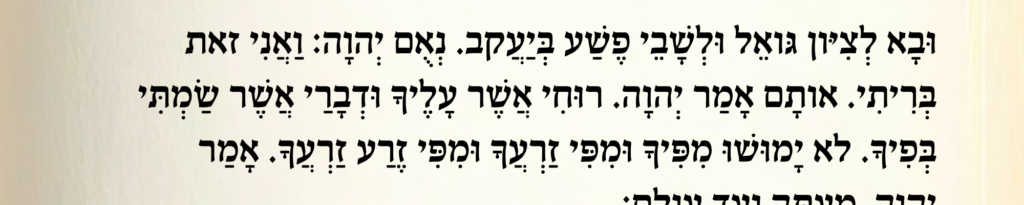
Unlike the weekday shemoneh esrei where we go directly from ashrei to shemoneh esrei, on Shabbat we insert uva letzion1.
This prayer expresses the Jewish hope for redemption and the return of God’s presence to Zion, emphasizing that salvation comes through justice, Torah, and faithfulness to God. At its heart is the Kedushah2 said in Aramaic, underscoring the sanctification of God’s Name even in exile and making its meaning accessible to all. The prayer weaves together verses that affirm God as King, Redeemer, and Protector of Israel, highlighting the enduring bond between God and His people and the belief that history is guided toward a moral and spiritual purpose. Ultimately, U’va L’Tzion reinforces the idea that learning Torah and living by its values sustain the world and hasten redemption.
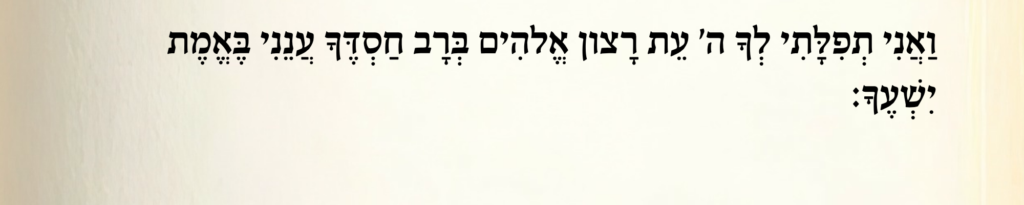
Vani Tefilati
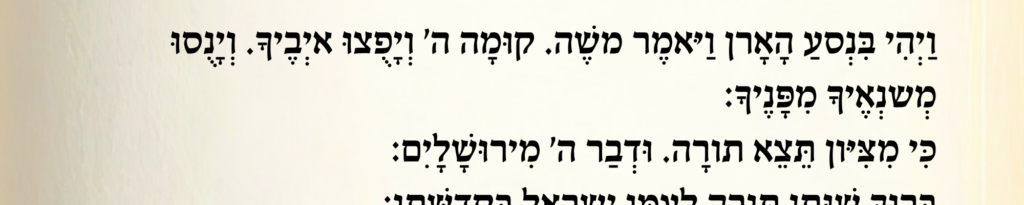
Torah Reading
Shemoneh Esrei
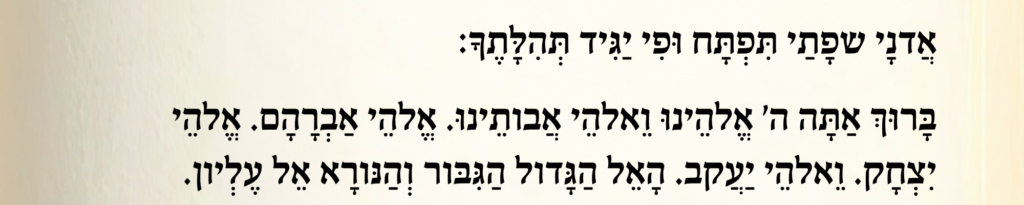
Tzidkatcha tzedek
Aleinu

Aleinu closes the prayer service by affirming the unique mission of the Jewish people to recognize and proclaim God’s sovereignty, reminding us as we leave prayer that we are charged with living differently and bringing that awareness into the world.
“Just as Mr. Prinz held firm when Shabbat was tested at its most inconvenient moment, Mincha gives each of us one more chance, right as the day begins to fade, to prove that our commitment does not waver either.”
1 We have omitted this prayer from its usual spot at shacharit, we therefore say it here.
2 Kedushah is a prayer sanctifying God’s Name, recited multiple times daily, during the reader’s repetition of Shemoneh Esrei at Shacharit, Mincha, and Mussaf. It is built around the angels’ declaration “Kadosh, Kadosh, Kadosh” (Holy, Holy, Holy). A separate, expanded version appears in Uva Letzion, phrased in Aramaic so that its message of God’s holiness, even in exile, is accessible to all.