Session 5: Shacharit (Morning Prayer) - part 2
What happens when our prayers aren’t answered the way we hoped?
In this session, we continue our journey through Shacharit, moving beyond the silent intensity of the Shemoneh Esrei into the deeply human, emotional, and reflective closing stages of the morning prayer.
Burst of Inspiration
Sam was brilliant. Disciplined. Responsible. The kind of young man every teacher admired. But socially, he lived on the sidelines.
He was never the one in the center of the room. Never the loudest voice. Never the natural magnet for attention. He watched others seize life while he stood respectfully in the background. He graduated high school with distinction. Excelled in college. Earned honors. Built a résumé anyone would envy.
But when it came to dating, Sam froze.
He struggled to put himself forward. Few people noticed him. Even fewer thought to suggest him.
And then he met her.
Her name was Esther.
She was everything he was not. Vibrant. Magnetic. Effortlessly social. The kind of woman who lit up a room without trying. To Sam, Esther felt like the perfect counterbalance to his quiet nature.
Secretly, he prayed.
He never said it out loud, but in the quiet corners of his heart he whispered to God, Please. Just give me a chance.
It felt impossible. Who would suggest them? And even if someone did, why would Esther agree?
Yet somehow, a mutual friend made the introduction.
Sam gathered courage he did not know he possessed. He asked Esther out. She said yes. They began to date.
And something extraordinary happened. Sam began to change. Esther drew him out. He laughed more. He spoke more. He stood taller. His friends noticed the transformation and were thrilled.
To Sam, it was no longer a question of if they would marry. Only when.
He began thinking about the right moment to propose.

Then, without warning, Esther disappeared.
No returned calls. No explanation. Just silence. Sam’s world collapsed.
The dreams he had built so carefully shattered overnight. He sank into a depression so heavy it felt physical. He stayed home. Avoided friends. Questioned everything.
Why would God do this?
Months passed. Finally, someone suggested he speak to a rabbi in Manhattan. Sam resisted, but he knew he could not continue like this.
He sat across from the rabbi and poured out his pain. The rejection. The humiliation. The shattered future he had imagined.
The rabbi listened quietly and then said words that would change his life.
“Sam, the ways of the Almighty are hidden from us. Sometimes we create a narrative that Heaven never intended to write. If there is no path forward with Esther, you must find the strength to stand up and move on. Perhaps God is protecting you. Perhaps there is someone else meant to build your future.”
It was not what Sam wanted to hear.

But he took the words seriously. With immense effort, he forced himself back into life. Back to work. Back to friends. Back to hope.
And then he met someone new. She was not a social butterfly. She was gentle. Thoughtful. Steady. Much more like him. Their connection was quiet, but deep. Not fireworks. A foundation.
They married. They built a beautiful Jewish home filled with harmony, laughter, professional success, and children who carried their values forward.
Years passed.
Nearly twenty years later, Sam stood in the lobby of a large wedding hall when a woman approached him. He did not recognize her at first. But the moment she spoke, his heart dropped.
It was Esther.
They exchanged pleasantries. She asked about his life. He shared about his family, his career, his happiness.
Then Esther shared hers. Three failed marriages. Depression. Addiction. A life unraveling.
Sam listened with compassion. He wished her well. They parted.
Driving home that night, Sam lifted his eyes heavenward.
And he thanked the Almighty. Not for giving him what he once begged for. But for not giving it.
From the deepest place in his soul, Sam thanked God for the unanswered prayer. For the door that had slammed shut. For the heartbreak that had felt unbearable.
Because that no had been the greatest yes of his life.
God always answers our prayers.
Sometimes the answer is yes.
Sometimes the answer is wait.
And sometimes the answer is no.
But His no is never rejection.
It is redirection.
God always answers our prayers.
Sometimes the answer is yes.
Sometimes the answer is wait.
And sometimes the answer is no.
But His no is never rejection.
It is redirection.
What feels like the end of our dream may simply be the beginning of His.
In this session, we pick up where we left off in the previous session.
In this series


Tachanun2 (Supplication)


Ashrei and Uva Letzion


The anchor psalm of daily prayer, recited multiple times a day. Built on Tehillim 145, it praises Hashem’s greatness and kindness, reminding us that every need — physical and spiritual — is sustained by Him.
core purpose
- Praise — declaring Hashem’s greatness, compassion, and care for all creation.
- Trust — affirming that our sustenance and protection come only from Him.
Structure
- Alphabetic Psalm — each verse follows the Hebrew alphabet (except the letter nun), showing the completeness of Hashem’s greatness.
- Highlight Verse: “Pose’ach es yadecha umasbia lechol chai ratzon; Open your hand and provide sustenance to all living things as needed” — recognizing Hashem as the provider of every living being.

core purpose
- Petition — asking Hashem to answer us “on the day of distress.”
- Solidarity — shifting from personal confession to communal strength.
- Hope — trusting that Hashem, not human power, brings victory.
Structure
- Verses of Prayer — asking Hashem to remember us, support us, and grant success.
- Famous Line: “Eileh varechev v’eileh vasusim, va’anachnu b’shem Hashem Elokeinu nazkir” — some trust in horses and chariots, but we rely on Hashem’s Name.
3. U’va L’Tzion6 (And a Redeemer Shall Come to Zion)

core purpose
- Redemption — affirming faith that Hashem will redeem us and rebuild Zion.
- Holiness — highlighting the Kedusha verses and our longing to sanctify Hashem’s Name.
- Learning — includes Aramaic translations, bringing Torah and holiness into the language of the people.
Structure
- Opening — “U’va L’Tzion Go’el” — a vision of redemption and Mashiach.
- Kedusha Section — verses of angelic praise (Kadosh, Baruch, Yimloch), recited in Hebrew and Aramaic.
- Concluding Prayers — requests for Torah wisdom, Divine favor, and strength to live faithfully.

Aleinu and the Yom (final prayer and the daily chapter)


Aleinu (It is our duty) — the closing declaration of Shacharit (as well as Mincha and Ma’ariv) — a moment of elevation, reflection, and commitment. If Pesukei Dezimra is the “stretch,” Shemoneh Esrei is the “race,” and Tachanun is the “emotional cool-down,” then Aleinu is the spiritual finish line — a declaration of faith, hope, and purpose.
core purpose
- Acknowledgment of God’s Sovereignty — Recognizing that Hashem alone rules the world, and that all creation is ultimately His.
- Call for Redemption — Expressing the hope that one day all people will serve Hashem with unity and truth.
- Personal and Communal Commitment — Affirming our duty to serve Hashem with sincerity, striving to live in alignment with His will.
Structure
- Opening Declaration: “It is our duty to praise the Master of all…” — praising God, acknowledging His uniqueness and our obligation to serve Him.
- Contrast with the World: Highlights the tendency of nations to follow false gods, and the hope that all will recognize Hashem’s sovereignty.
- Closing Prayer: Requests the ultimate redemption, the coming of God’s Kingdom, and the ingathering of all people in truth and justice.
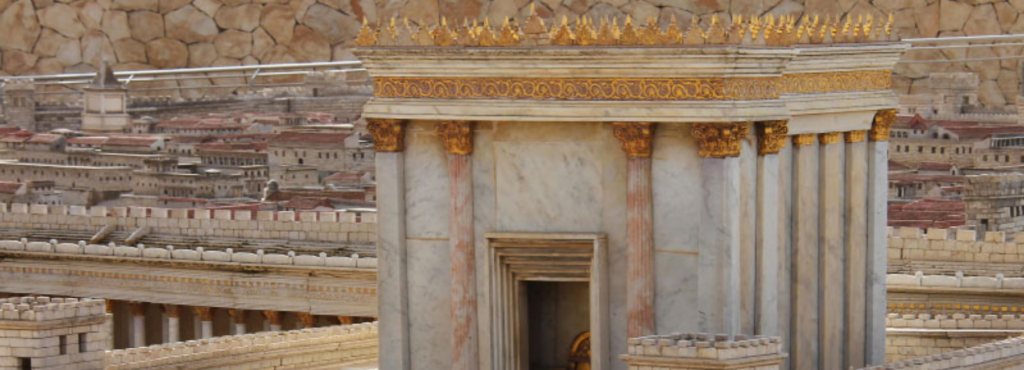

Shir Shel Yom (Psalm of the Day) — the daily closing of Shacharit, reminding us that every day has its own unique spiritual energy.
Introduced with Hayom yom rishon… (“Today is the first day [Sunday, Monday, etc.]…”), each psalm is linked to the day of the week and to the song the Levites (a priestly group) once sang in the temple in Jerusalem.
core purpose
- Daily mindfulness — connecting each day of the week with its spiritual theme.
- Temple remembrance — recalling the Levi’ims’ service in the Beit HaMikdash.
- Personal grounding — orienting us for the day ahead with a closing message of faith, trust, or strength.
Structure
Each day has its own psalm, reflecting creation and its spiritual theme:
- Sunday — Tehillim 24: The world belongs to Hashem.
- Monday — Tehillim 48: Hashem’s greatness in Zion.
- Tuesday — Tehillim 82: Justice and righteousness.
- Wednesday — Tehillim 94: Divine justice over nations.
- Thursday — Tehillim 81: Joy and song to Hashem.
- Friday — Tehillim 93: Hashem’s majesty and Shabbat’s arrival.
- Shabbat — Tehillim 92: Gratitude for creation’s completion.
1 Pg.98 in the ArtScroll Wasserman Edition Siddur
2 Pg. 132 in the ArtScroll Wasserman Edition Siddur
3 During Tachanun, we lower our head onto the arm in nefilat apayim — a gesture of humility, self-surrender, and angelic awe. The Zohar (the text book of Kaballah) says it’s a moment of giving our soul over to The Almighty and it softens harsh judgments. It is also compared to resting like a child in a Father’s embrace
4 Pg. 150 in the ArtScroll Wasserman Edition Siddur
5 Pg. 152 in the ArtScroll Wasserman Edition Siddur
6 Pg. 154 in the ArtScroll Wasserman Edition Siddur
7 Pg. 158 in the ArtScroll Wasserman Edition Siddur
8 Beginning Pg. 162 in the ArtScroll Wasserman Edition Siddur