Session 4: Shacharit (Morning Prayer) - part 1
Burst of Inspiration
Right after World War II, Rabbi Yisroel Aryeh Munk and his wife purchased a campground in Upstate New York in hopes of launching what would become Camp Munk.
The campgrounds had previously been a resort, and during the war had been used as a boot camp. The Munks were thrilled at the opportunity to bring Jewish children to a place where they could experience a positive, enriching summer.
But there was a problem.
When the health department came down to inspect, they took one look at the water supply and said, “You cannot run a camp here. There’s not enough water.”
What were they supposed to do?
They hired a dowser; a fellow to come search for a well. He walked the campgrounds—from top to bottom, right to left—but he was unable to find any water. Camp was just weeks away, and they were out of options.
So, Rabbi and Mrs. Munk told the man to keep searching. Then they walked into a bungalow, took out a Tehillim, a book of Psalms, and poured out their hearts to the Almighty for two hours.
At the end of those two hours, there was a knock at the door.
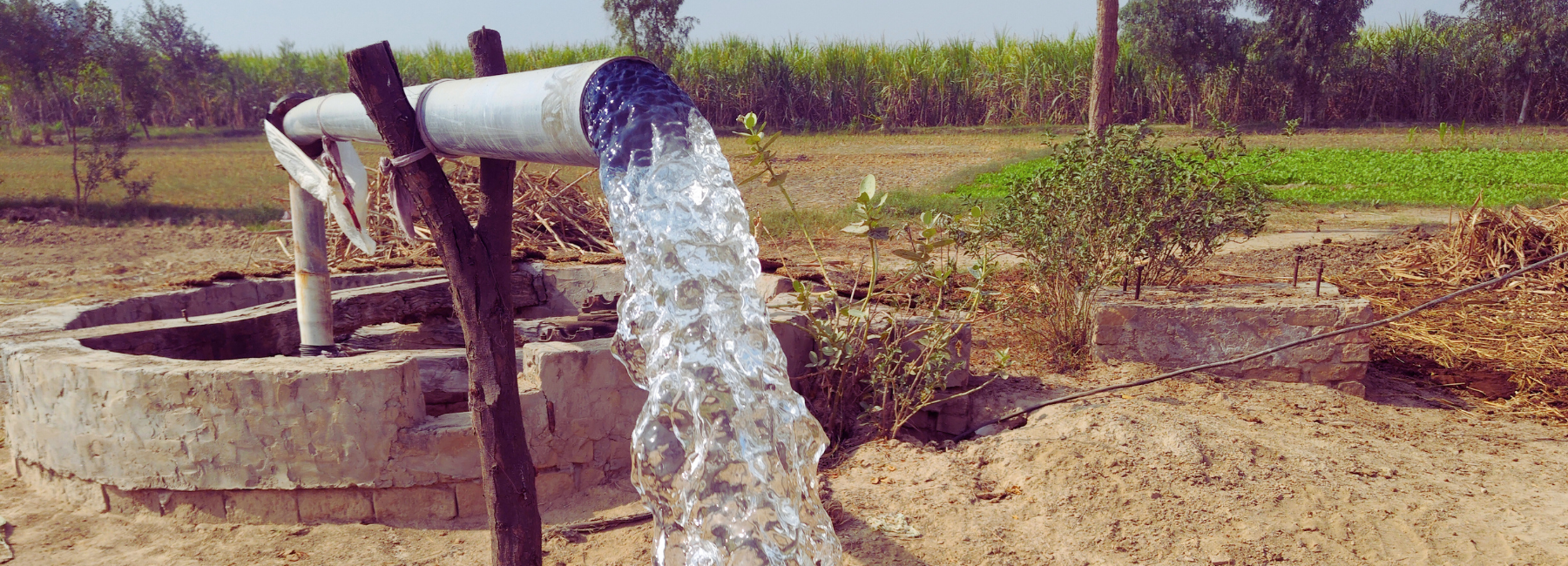
The dowser stood there with big news: he had discovered a well that could provide 75 gallons of water per minute.
Camp Munk was born.
Fast forward (by Rabbi Shlomo Landau):
Over the last few summers I have had the opportunity to spend Shabbat at Camp Munk as the guest speaker.
During the Friday night meal, Rabbi Pini Munk, the dedicated Camp Director and grandson of the camp’s founder Rabbi Yisroel Aryeh Munk stood up and humbly shared what had transpired just a few hours earlier.
At 6:00pm—prime time for pre-Shabbat showers—the well suddenly stopped producing water.
As the dedicated director of the camp, Rabbi Pini Munk, tried everything he could to repair the well. Nothing worked. At a loss, he went to his mother, the “queen of the camp”—and told her what had happened.
She paused and suddenly remembered the story of her own parents—Rabbi Yisroel Aryeh and his wife.
She cloistered herself in a bungalow with her Tehillim, and began to pray. And within minutes… the water started gushing forth again. Camp had the water it needed.
Incredible. The power of Tehillim, the power of real heartfelt and genuine prayer. And in truth, it shouldn’t be incredible to us—because if we truly believed in what tefillah can do, we’d expect miracles like this to happen.
So let’s take a page from the playbook of the Munk Family and Camp Munk, and always remember that real, sincere, and heartfelt prayer can do anything.

In this series
three daily prayers
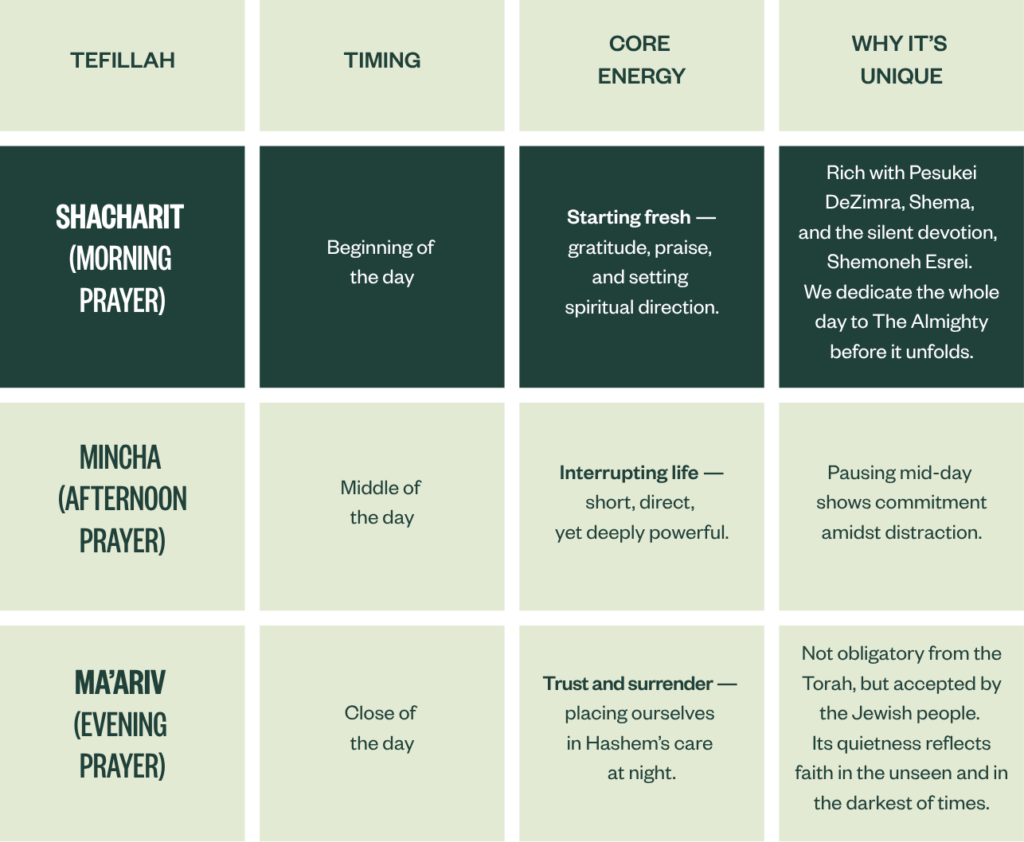
Our Rabbis have established three daily prayers with key core elements and spiritual intentions that shape the rhythm of Jewish life.
These prayers—
- Shacharit (morning)
- Mincha (afternoon)
- Ma’ariv (evening)
correspond to the daily offerings in the ancient Temple and reflect moments of transition in the human experience: awakening, reflection, and rest.
Each prayer includes the foundational components of praise (shevach), request (bakasha), and thanks (hoda’ah), guiding the soul through connection, humility, and hope. Together, they form a sacred framework for aligning our day with divine presence and purpose.

The Three Daily Tefillot:
An Arc of Connection
shacharit in a box

Shacharit is the longest of all of the prayer services as it sets the stage for the day.
Here we walk you through the key components of the prayer.
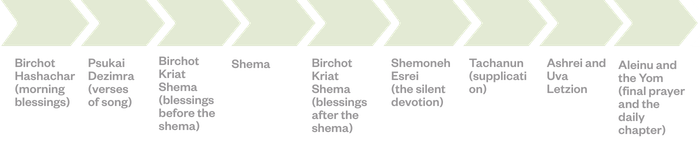

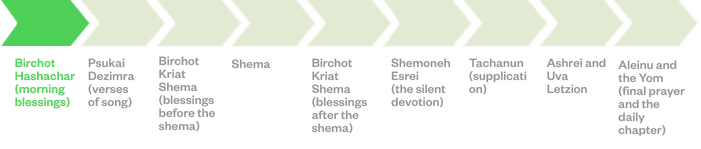

- Birchot HaShachar1 (Morning Blessings”) are a series of short blessings recited at the start of the daily Shacharit prayer. These blessings serve as a spiritual “wake-up” — helping us transition from sleep into a state of gratitude, awareness, and readiness to serve The Almighty. Originally, each blessing was said at the exact moment a person experienced the event it describes (for example, upon opening one’s eyes, getting dressed, standing up, etc.). Over time, the blessings were grouped together and recited in the more formal prayer service, forming the opening section of the morning prayers.
- To thank The Almighty for the simple gifts we often take for granted — eyesight, clothing, mobility, freedom, identity, and more.
- To frame the day with gratitude before engaging with the world.
- To remind us that every physical ability has a spiritual purpose.
Structure
The blessings can be divided into three broad themes:
- Blessings of Physical Function and Daily Needs
- Blessings of Jewish Identity and Purpose
- Blessings for the Mind and Soul

-
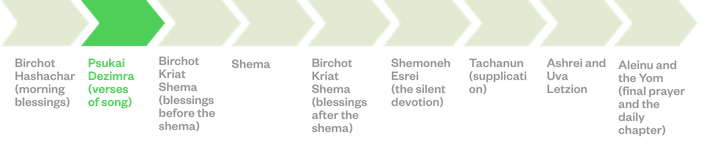
Pesukei DeZimra3 (“Verses of Song”) is the song-filled warm-up section of Shacharit.
It’s like the spiritual “stretching” before we run the race of the day’s prayers —
moving us from just waking up to feeling inspired and ready to stand before The Almighty.
- Shift mindset — from distracted, weekday thoughts to focused, prayerful awareness.
- Fill our hearts with praise — so when we finally stand for the shemoneh esrai, our requests come from a place of deep gratitude.
- Remind us of The Almighty’s greatness in creation, history, and personal life.
Structure
Pesukei DeZimra is made up of praise-heavy passages from Tehillim (Psalms) and other Biblical texts, plus blessings before and after.
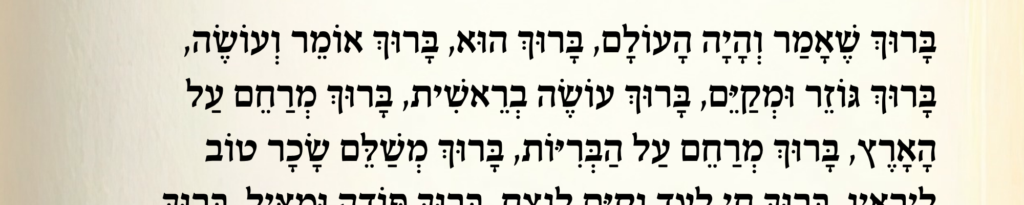
- Opening Blessing: Baruch She’amar — thanking Hashem for creating and sustaining the world through His word.
- Main Body: Tehillim chapters 145–1504 — Passages describing Hashem’s power, kindness, and the beauty of His creation.
- Closing Blessing: Yishtabach5 — concluding praise that bridges us to the Shema blessings.

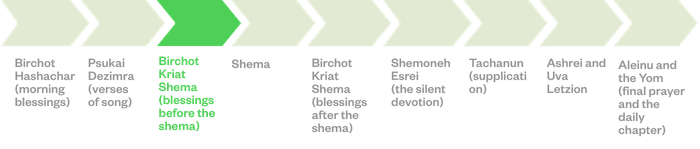
- Birchot Kriat Shema6 (“Blessings of the Shema”) are the blessings that surround the Shema in Shacharit and Ma’ariv.They are not just introductions and conclusions — they set the spiritual stage for saying Shema by guiding us through the key themes of Jewish faith.
Structure
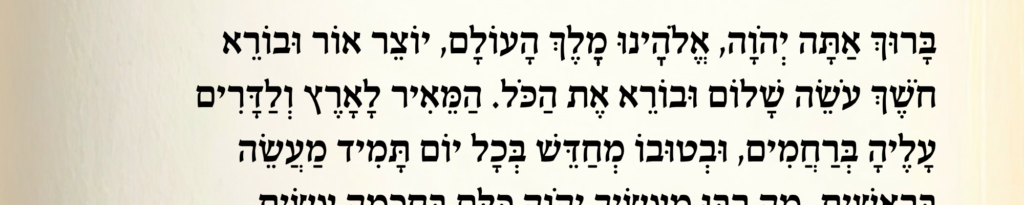
- Before Shema: Yotzer Or (He Who Creates Light) — Praise for The Almightys’ creation of light and the natural order.Focus on physical light (yotzer or).
- Ahava Rabbah7 (A Great Love) — Gratitude for The Almighty’s love through the gift of the Torah and a prayer for success in Torah learning & living.
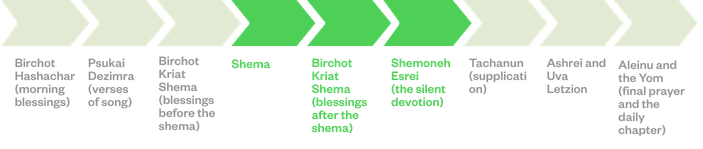
- Shema8: Declaration of faith, acceptance of mitzvot, and remembrance of the Exodus (see session 3).
- After Shema: Emet V’yatziv9 (True and Certain) — Affirmation of the truth of the Shema and remembrance of The Almighty’s redemption of Israel from Egypt.
-
Shemoneh Esrei10 (the silent prayer): See session 3.
1 Pg.18 in the ArtScroll Wasserman Edition Siddur
2 See session 12 for a deep dive into these blessings
3 Pg. 58 in the ArtScroll Wasserman Edition Siddur
4 Pg. 66 in the ArtScroll Wasserman Edition Siddur
5 Pg. 82 in the ArtScroll Wasserman Edition Siddur
6 Pg. 84 in the ArtScroll Wasserman Edition Siddur
7 Pg. 88 in the ArtScroll Wasserman Edition Siddur
8 Pg. 90 in the ArtScroll Wasserman Edition Siddur
9 Pg. 94 in the ArtScroll Wasserman Edition Siddur
10 Pg. 98 in the ArtScroll Wasserman Edition Siddur