session 3:
THE SHEMA AND THE AMIDA
In this session, we will learn the meaning and structure of the Shema and the Amida, and how they deepen our faith, focus, and connection to Hashem.
meaning rewritten
When the renowned psychiatrist Viktor Frankl arrived at Auschwitz, he carried almost nothing. Like every other prisoner stepping off the cattle car, he held a small satchel containing the few possessions he had managed to bring with him. Yet among everything inside, one item was infinitely more precious than the rest.
It was the manuscript of his life’s work.
For years, Frankl had immersed himself in the study of the human mind. As a young psychiatrist in Vienna, he had become convinced that man’s deepest need was not pleasure or power, but meaning. Patient after patient, observation after observation, he carefully developed ideas that challenged many of the prevailing assumptions of psychology. Every insight was written down. Every discovery preserved. The thousands of handwritten pages inside that satchel represented years of painstaking research and the work to which he had devoted his life. Looking back years later, Frankl would describe the manuscript as his “mental child.”
The platform at Auschwitz was a world unto itself. German commands echoed through the air. Guards shouted. Dogs barked. Families were torn apart within moments of stepping off the train. Prisoners were pushed forward with no explanation of what lay ahead.
Like everyone else, Frankl was ordered to surrender everything he possessed.
His satchel was taken from him.
There was no discussion. No one asked what was inside. No one cared. In a matter of seconds, years of research, reflection, and sacrifice disappeared forever into the machinery of Auschwitz.

Frankl later wrote that losing the manuscript was one of the deepest emotional blows he experienced. It was not simply the loss of paper. It felt as though the work to which he had dedicated his life had been erased before his eyes. Everything he had hoped to contribute to the world vanished in a single moment.
Soon afterward, he was issued the worn clothing of a prisoner who had already been sent to the gas chambers. As he searched through the pockets of the coat, his fingers touched a folded scrap of paper.
He unfolded it.
It was a torn page from a Hebrew siddur.
Most of the page was missing. Only a few lines remained, but they contained words that had sustained the Jewish people for thousands of years:
שמע ישראל ה’ אלקינו ה’ אחד
Frankl never forgot that discovery.
Years later, he reflected that he did not regard finding that page as mere coincidence. To him, it became a challenge. Until that moment, he had dedicated himself to studying and writing about the human search for meaning. Now, stripped of nearly everything he possessed, life was asking whether he could live the very truths he had spent years trying to understand.
The symbolism is striking.
Thousands of pages containing Frankl’s own words had been taken from him.
In their place, he was left holding a single torn page containing Hashem’s words.
One manuscript represented what he wanted to give the world.
The other reminded him of Who was guiding his world.
Frankl would survive Auschwitz. After the war, he painstakingly reconstructed the manuscript that had been lost and eventually published the ideas that would influence millions of people around the world. Yet one cannot help but wonder whether the most important lesson of his life was not found in the thousands of pages he rewrote, but in the single page he found.
How often do we define ourselves by the manuscripts we have written?
The plans we have made. The dreams we have pursued. The future we imagined.
And then, sometimes, Hashem takes those pages away.
A loss. A disappointment. A path we never expected to walk.
In those moments, we are faced with a choice. We can believe that the story has gone wrong because it no longer matches the one we wrote, or we can recognize that the story was never truly ours to write.
That was the message of the Shema that Frankl found in the darkness of Auschwitz.
Hashem is One.
He is not only the Creator of the world; He is the Author of every chapter of our lives. Even when the narrative changes, even when the pages look nothing like what we expected, they remain part of the story He is writing.
Frankl lost thousands of pages of his own words.
But he discovered a single page that reminded him of the deepest truth: the most important story of his life was never the one he planned to write.

In this series
The Shema 1
Prior to introducing the practical format of different prayer services and empowering you to feel familiar and comfortable upon entering prayer services, we wanted to introduce and explain one of the most important pieces of the prayer service: the Shema. The Shema is recited daily in the Shachrit/morning and Maariv/evening service. Additionally, a portion of the shema is recited daily at bedtime.
At the heart of the Shema lies its first verse— Judaism’s most powerful declaration of God’s Oneness.
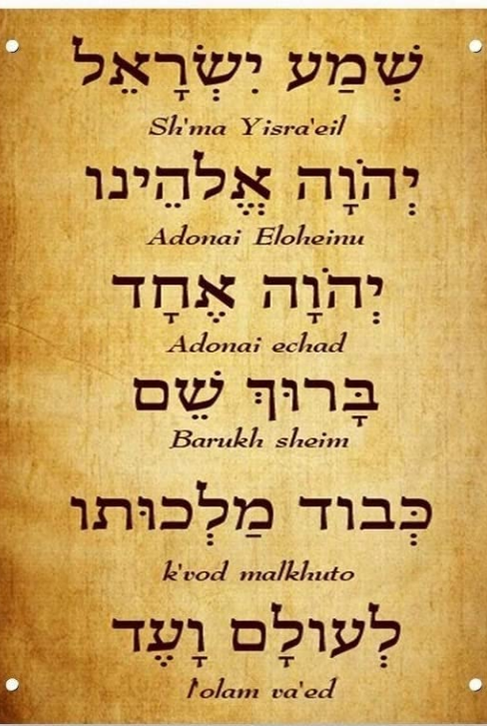
שְׁמַע יִשְׂרָאֵל, ה’ אֱלקינוּ, ה’ אֶחָד
Listen Jewish People; Hashem who is our G-d, Hashem is One
(Deuteronomy 6:4)
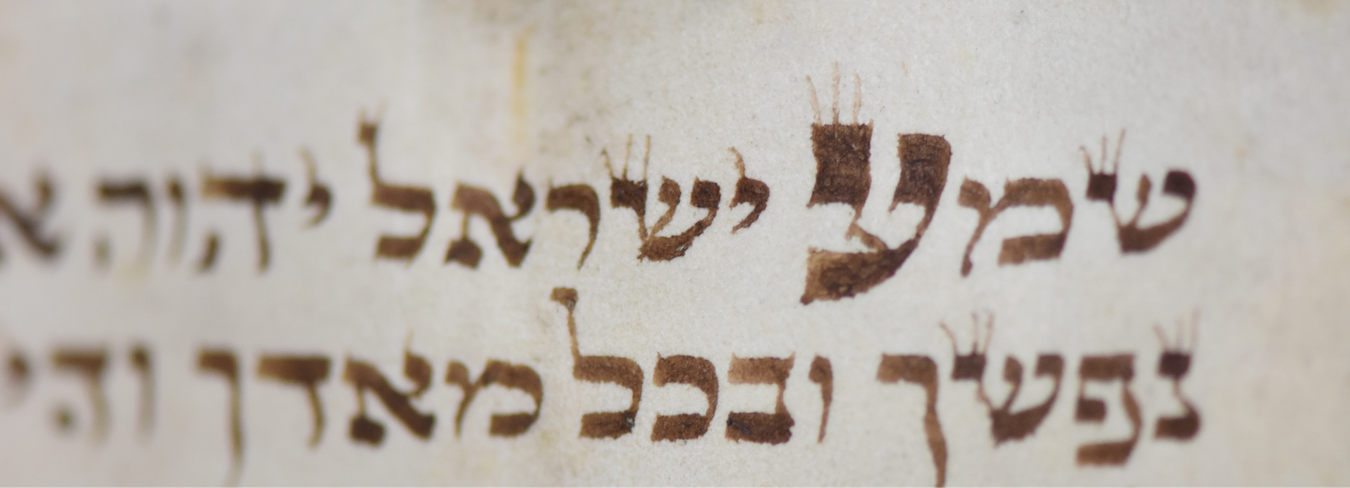
This isn’t just a theological idea—it’s a testimony. In the Torah scroll, two letters are written larger than the rest: the Ayin in Shema and the Daled in Echad. Together they spell “עֵד” (eid)—meaning witness. Every time we say the Shema, we are bearing witness to God’s Oneness.
We customarily cover our eyes when saying it, creating inner stillness and helping us block out distractions to focus entirely on these profound words as we connect to the presence of God.
Why is oneness so central to Jewish belief? And does it really matter whether The Almighty is “one” or “three,” or something else?
It matters deeply—because it speaks to how we understand our world.
We all live through confusing and contradictory experiences—one day filled with blessings, the next with struggle or heartbreak.
Is the same Almighty behind both?
The Shema says: Yes. Absolutely.
Think of a prism: white light enters, and it breaks into a rainbow of colors. Our world looks like that spectrum—disconnected, multi-colored, random. But in truth, it all flows from one pure light.
This is the essence of the Shema: behind every experience, there is
One Source. There is no battle of opposing gods. No competing cosmic forces. Judaism firmly rejects dualism.
Instead,The Shema calls us to see beyond appearances and trust in something deeper. Not to explain pain away, but to root ourselves in a larger truth:
There is One God, One reality, and we are part of a unified story.
THE SHEMA: BARUCH SHEM & Ve’AhAVTA
After we declare the oneness of the Almighty we add one verse:
בָּרוּךְ שֵׁם כְּבוֹד מַלְכוּתוֹ לְעוֹלָם וָעֶד
Blessed be the Name of His glorious kingdom for ever and ever2.
The first Paragraph: Ve’ahavta
This paragraph teaches us to:
- Love The Almighty with all our heart, soul, and resources;
- Keep His words close in thought, speech, and action so that we are constantly reminded of our relationship and mission by:
- Teaching them to our children;
- Speaking of them during daily life;
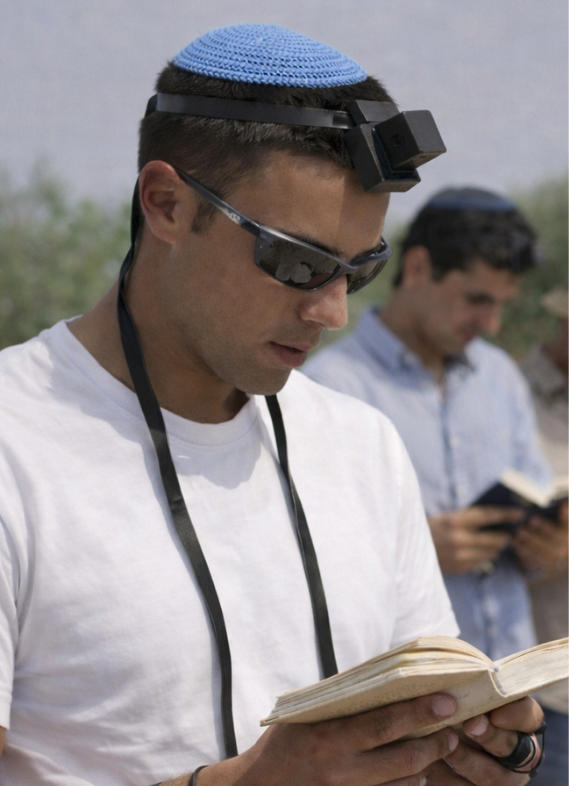
- Wearing them on our bodies through the mitzvah of tefillin; and
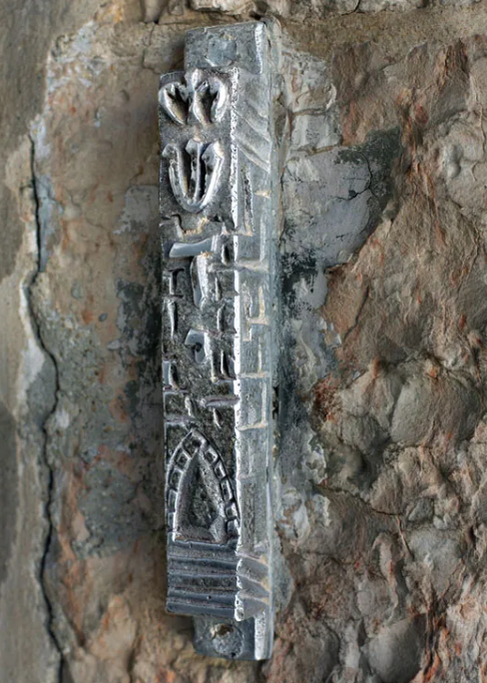
- Affixing them to our homes through the mitzvah of mezuzah.
THE SHEMA: Vehaya Im SHAMoA
- If we listen to The Almighty and follow His mitzvot with love and loyalty, we’ll receive blessings—good livelihood, and a safe home in the Land of Israel.
- If we turn away and follow other paths, those blessings may cease, and we risk losing our connection to the land.
- Teach the words to our children;
- Bind them as a sign (tefillin), and
- Post them on our doorposts (mezuzah)

THE SHEMA: VAYOMER
- We are to wear fringes on the corners of our garments.
- These are reminders to observe God’s commandments and live with holiness.
- We are warned not to follow our hearts or eyes toward sin and urged to stay devoted to God.
THE INTRO TO THE AMIDA
The Amidah, meaning “standing,” is the central part of each service. It’s also called the Shemoneh Esrei (literally “eighteen”), though it now includes nineteen blessings. These blessings are organized into three sections:
- Three of praise, where we acknowledge God’s greatness.
- Thirteen of request, where we ask for wisdom, health, redemption, livelihood, and more.
- Three of gratitude, where we express thanks for what we’ve received.
This structure reflects the way one might approach a respected leader: beginning with honor, continuing with personal requests, and concluding with appreciation.
The Amidah is said silently, standing with feet together, facing Jerusalem. In the U.S., this usually means facing east; in Israel, we face the Temple Mount in Jerusalem. Standing with our feet together symbolizes focus and purpose—like angels who are described as having “one leg,” moving only with full intention.
The Amidah should be recited with concentration and respect, as if you’re directly addressing a king. It’s important to understand what you’re saying, and to go slowly enough to focus on each blessing. If you can’t concentrate on the whole prayer, try especially to focus on the first blessing, which holds particular importance.
- Avot – Praising The Almighty and tapping into the inner strengths of our ancestors: Avraham, Yitzchak, and Yaakov.
- Gevurot – Praising The Almighty’s power, especially His ability to give life and resurrect the dead.
- Kedushat Hashem – Praising God’s holiness and man’s ability to tap into that holiness.
- Binah (Understanding) – Request for wisdom, insight, and clarity.
- Teshuvah (Repentance) – Asking to be drawn closer to The Almighty and for assistance in returning to His path.
- Selichah (Forgiveness) – Requesting pardon for sins.
- Geulah (Redemption) – Asking for personal and national deliverance and redemption.
- Refuah (Healing) – Prayer for healing for all of our nation’s ill.7
- Birkat Hashanim (Blessing the Years) – Request for livelihood, a good harvest and the ability to be satisfied with our blessings.
- Kibbutz Galuyot (Ingathering of Exiles) – Asking The Almighty to gather the Jewish people from exile.
- Din (Justice) – Request for the restoration of just and fair justice.
- Minim (Against Heretics) – Asking for the downfall of our enemies both physical and spiritual.
- Tzaddikim (For the Righteous) – A prayer for compassion for the righteous and a request to reward those with true faith and trust in the Almighty.
- Yerushalayim (Rebuilding Jerusalem) – A prayer for the rebuilding of Jerusalem.
- Malchut Beit David (Messianic Kingdom) – Request for the return of the Davidic dynasty with the arrival of the Messiah.
- Tefillah (Acceptance of Prayer) – Asking The Almighty to receive and accept our prayers.

- Avodah – Asking for the restoration of Temple service.
- Hoda’ah (Thanksgiving) – Expressing thanks for daily miracles and life itself.
- Sim Shalom (Peace) – Request for peace, goodness, and blessing for the people of Israel.
- One Final Prayer (Elokai netzor) – we ask The Almighty to help us guard our words, avoid gossip and deceit, and respond to others with patience and humility. It’s a quiet moment of introspection—seeking not just external success, but inner refinement. We ask for guidance to live with integrity, to stay connected to Torah, and to experience peace. The prayer closes by asking that our words and thoughts be pleasing before God, capturing the essence of prayer as both conversation and self-transformation.8
Prayer Through the Ages
As we continue to explore the power of prayer, you can begin to get a sense of why and how our Rabbis composed these powerful mantras as means of introspection, connection to God, and testimonies of Jewish values through the ages.
The Shema urges us to stay spiritually and physically connected to our Jewish teachings and to pass them on to the next generation. The Amidah gives us space to highlight all the ways in which we rely on God and give thanks – from livelihood to wisdom and reprieve from our enemies.
It is no wonder that these prayers have withstood the hands of time – their messages still ring true!
The Amidah, meaning “standing,” is the central part of each service. It’s also called the Shemoneh Esrei (literally “eighteen”), though it now includes nineteen blessings. These blessings are organized into three sections:
- Three of praise, where we acknowledge God’s greatness.
- Thirteen of request, where we ask for wisdom, health, redemption, livelihood, and more.
- Three of gratitude, where we express thanks for what we’ve received.
1 Pg. 90 in the ArtScroll Wasserman Edition Siddur
2 We recite “Baruch Shem Kevod Malchuto Le’olam Va’ed” in a whisper during the Shema because, according to the Midrash, it was Yaakov’s personal expression of praise, not part of the original Torah verse, and we lower our voice out of respect. Additionally, the Talmud teaches that this phrase belongs to the angels’ praise in heaven, and since we are not angels, we say it quietly as a gesture of humility.
3 Pg. 92 in the ArtScroll Wasserman Edition Siddur
4 Pg. 94 in the ArtScroll Wasserman Edition Siddur
5 Pg. 98 in the ArtScroll Wasserman Edition Siddur
6 The first and last three blessings are a constant every time that the amidah is recited (See Session 2 re: Shacharit – Morning prayers, Mincha – Afternoon prayers and Maariv – Nighttime prayers). The middle blessings change on Shabbat and holidays.
7 In this section, one may pray for individuals who are ill by listing them with their Hebrew names, followed by the name of their mother (e.g., Rachel bat Elana). This tradition reflects a deep-rooted belief in the power of personal prayer (tefillah). It is considered especially auspicious to pray directly for an individual by name. The Talmud teaches that “Whoever prays for another while they themselves are in need, their own prayers are answered first” (Bava Kama 92a), highlighting the spiritual reciprocity and merit in prayer.
8 It is important to note that one is encouraged to add their own personal prayer and request at the conclusion of elokai netzor. This prayer can be said in any language and it is an opportunity to share with the Almighty one’s needs, hopes and aspirations.